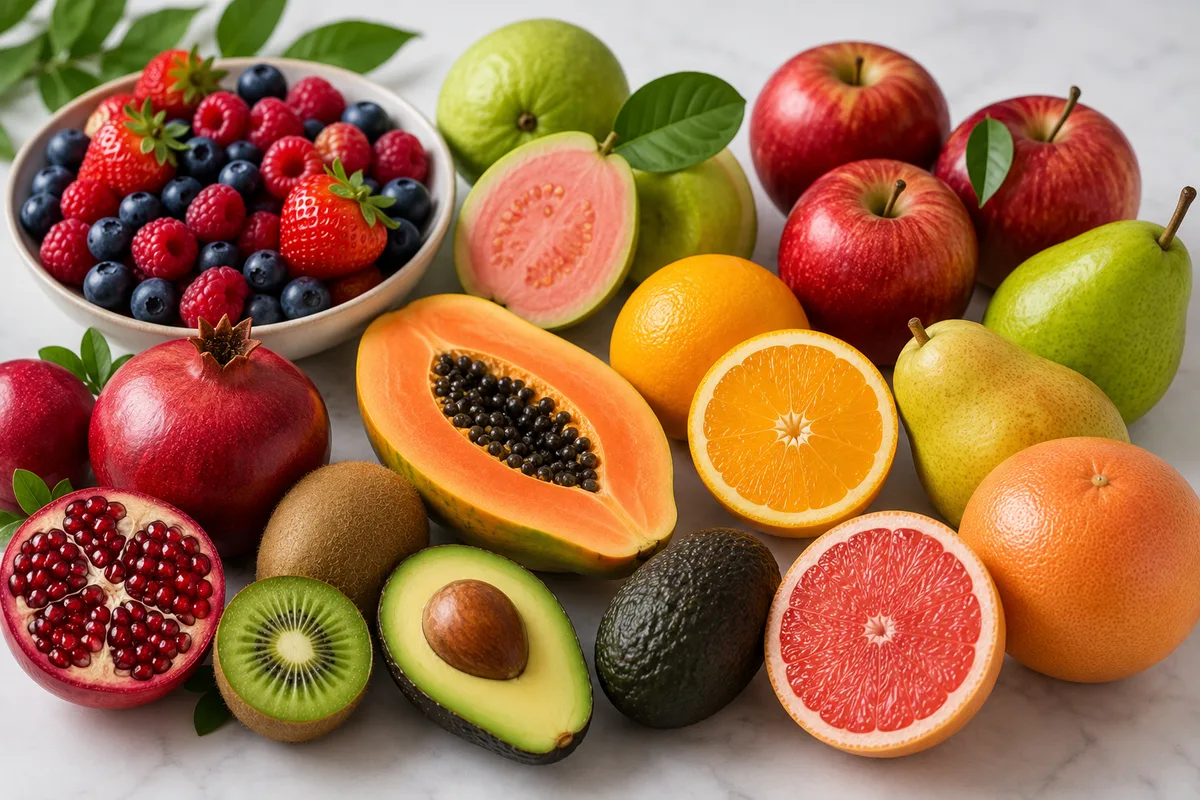
Getting told to “watch your sugar” often gets misread as “give up fruit,” and that’s honestly a shame, because most fruits are nowhere near the problem people assume they are.
The truth is more nuanced. Fruit contains natural sugar, yes, but it also comes packaged with fiber, water and antioxidants that slow down how quickly that sugar hits your bloodstream. The fruits that matter most for blood sugar management are the ones with a lower glycemic index and higher fiber content, meaning they release energy slowly instead of all at once.
This isn’t medical advice, and if you’re managing diabetes, it’s always worth checking with your doctor or a dietitian about what fits your specific plan. But as a general guide, here are 10 of the best fruits for diabetes that are easy to find across the UAE.
1. Berries (Strawberries, Blueberries, Raspberries)
Source: Freedom From Diabetes
Berries are consistently at the top of any list like this, and for good reason. They’re naturally lower in sugar than most fruits and carry one of the lowest glycemic loads around, while still delivering a serious antioxidant punch.
- Nutrition: ~32-57 calories per 100g depending on the berry, low glycemic index, high in fiber and antioxidants.
- How to eat it: Add a handful to plain yogurt or oats, or eat them fresh as a between-meal snack.
Order on NRTC Fresh for individual orders (OR) Enquire for Wholesale Orders
2. Guava
Source: Healthline
Guava is a UAE market favorite, and it happens to be one of the best fruits for blood sugar control out there. Its exceptionally high fiber content helps slow sugar absorption, and studies have repeatedly linked it to better post-meal glucose levels.
- Nutrition: ~68 calories per 100g, around 5g fiber, low glycemic index.
- How to eat it: Eat it whole with the skin on for maximum fiber, or slice it with a pinch of chili-lime salt.
Order on NRTC Fresh for individual orders (OR) Enquire for Wholesale Orders
3. Apples
Source: Healthline
Apples hold onto their sugar release thanks to a good dose of fiber, particularly in the skin, which keeps blood sugar spikes in check and keeps you full for longer between meals.
- Nutrition: ~52 calories per 100g, 2.4g fiber, low-to-moderate glycemic index.
- How to eat it: Eat it whole with the skin on. A few almonds alongside make it an even steadier snack.
Order on NRTC Fresh for individual orders (OR) Enquire for Wholesale Orders
4. Pears
Pears are underrated here. Their fiber content, especially in the skin, slows digestion and helps prevent the sharp sugar spikes that come from faster-digesting carbs.
- Nutrition: ~57 calories per 100g, 3.1g fiber per 100g, low glycemic index.
- How to eat it: Eat it whole with the skin on, or slice into a salad with walnuts for extra staying power.
Order on NRTC Fresh for individual orders (OR) Enquire for Wholesale Orders
5. Oranges
Source: Healthline
Oranges are juicy and satisfying without pushing blood sugar too hard, as long as you eat the fruit itself rather than the juice, which strips out the fiber and leaves mostly sugar behind.
- Nutrition: ~47 calories per 100g, 2.4g fiber, low-to-moderate glycemic index.
- How to eat it: Eat it as a whole fruit rather than juicing it, so the fiber stays intact.
Order on NRTC Fresh for individual orders (OR) Enquire for Wholesale Orders
6. Kiwi
Source: American Diabetes Association
Kiwi is small but genuinely useful here. Its fiber content is high relative to its size, and it has a low glycemic index, so it doesn’t cause the sugar swings some other sweet fruits do.
- Nutrition: ~61 calories per 100g, high in fiber, low glycemic index.
- How to eat it: Slice it in half and scoop it out with a spoon, or add to a fruit salad.
Order on NRTC Fresh for individual orders (OR) Enquire for Wholesale Orders
7. Papaya
Source: Vinmec
Papaya has a moderate glycemic index, so portion size matters a bit more here than with some other fruits on this list, but its fiber content and digestive enzyme, papain, still make it a solid choice in reasonable servings.
- Nutrition: ~43 calories per 100g, moderate glycemic index, good source of fiber and vitamin A.
- How to eat it: Stick to a modest portion, eaten fresh and chilled, ideally alongside protein.
Order on NRTC Fresh for individual orders (OR) Enquire for Wholesale Orders
8. Pomegranate
Source: 1mg
Pomegranate seeds are sweet without being as sugar-heavy as they taste, and they bring a strong dose of antioxidants that have been linked to better insulin sensitivity in several studies.
- Nutrition: ~83 calories per 100g, moderate glycemic index, high in fiber and antioxidants.
- How to eat it: Eat the seeds straight, or sprinkle over salads and yogurt for texture.
Order on NRTC Fresh for individual orders (OR) Enquire for Wholesale Orders
9. Avocado
Source: Medical News Today
Avocado barely registers on the glycemic index because it’s genuinely low in sugar, and its healthy fat content actually helps slow digestion when paired with other foods, making it a smart addition for blood sugar management.
- Nutrition: ~160 calories per 100g, very low sugar, high in fiber & monounsaturated fats.
- How to eat it: Spread on whole-grain toast, add to a salad, or mash into a simple dip. Keep portions moderate since it’s calorie-dense.
Order on NRTC Fresh for individual orders (OR) Enquire for Wholesale Orders
10. Grapefruit
Source: Everyday Health
Grapefruit has long been associated with better blood sugar control, and it’s low in calories and sugar while still being genuinely filling thanks to its fiber and water content.
- Nutrition: ~42 calories per 100g, low glycemic index, high in vitamin C and fiber.
- How to eat it: Eat it fresh, or squeeze it for juice without added sugar.
Order on NRTC Fresh for individual orders (OR) Enquire for Wholesale Orders
A Few Quick Tips
- Stick to whole fruits over juices. Juicing removes the fiber that slows sugar absorption, leaving mostly fast-digesting sugar behind.
- Watch portion sizes. Even low-GI fruits can raise blood sugar if you eat a large amount at once.
- Pair fruit with protein or healthy fats. A handful of nuts or a spoon of yogurt alongside fruit helps flatten the blood sugar response.
- Spread fruit across the day. Smaller portions at different times tend to be gentler on blood sugar than one large serving.
And as always, this is general nutrition information, not a treatment plan. If you’re managing diabetes, it’s worth working with your doctor or a registered dietitian to figure out what portions and fruits fit your specific situation best.
Where to Buy Fruits in the UAE?
For regular home orders, head over to nrtcfresh.com, our consumer platform where you can order fresh fruits for single deliveries straight to your doorstep.
If you’re looking at bulk orders for offices, gyms, hospitals, or any business need, it’s best to reach out directly to us on nrtcgroup.com, where our team can help set you up with consistent supply and good bulk pricing.
Either way, eating for better blood sugar control doesn’t have to be complicated or boring, just consistent, fresh and reasonably portioned.