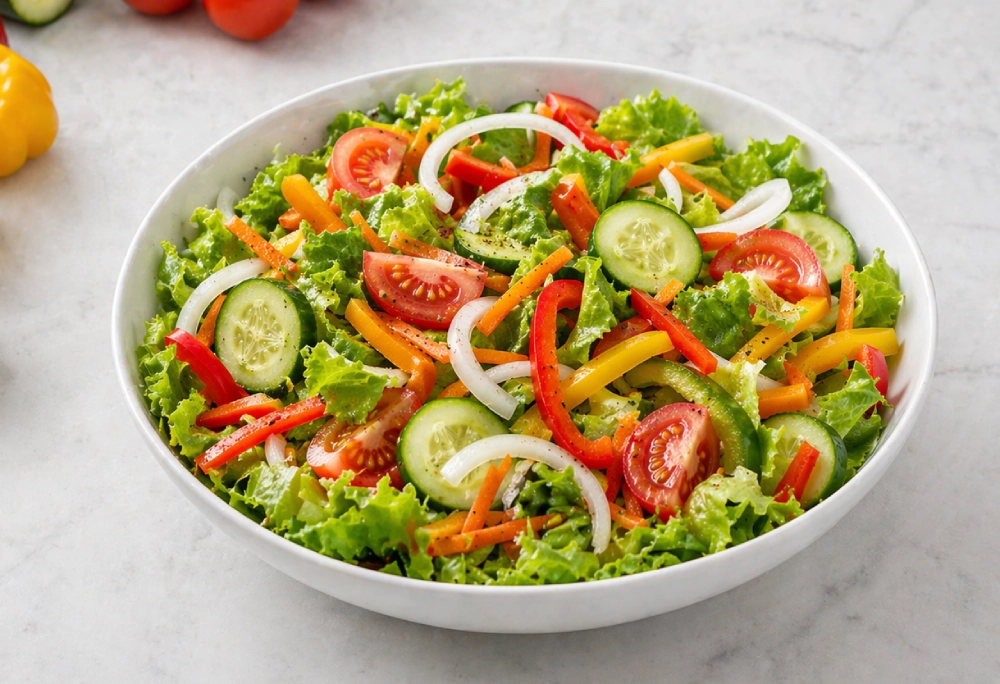
Let’s face it – not all salads are created equal. Some feel like a chore to get through, while others are actually satisfying, fresh, and something you’d choose to eat. The difference usually comes down to what you put in the bowl.
A great salad isn’t just about tossing in a few random veggies and hoping for the best. It’s about picking the right ones, the kind that add crunch, color, flavor, and enough substance to keep you full. Once you know which vegetables really pull their weight, salads stop feeling boring and start feeling like a proper meal.
Here are six must-have vegetables that can turn any basic salad into something genuinely worth eating.
1. Lettuce (Romaine / Iceberg / Butter Leaf)
It all starts here. Lettuce is the base of almost every salad on the planet, and honestly, the variety you pick matters more than people think.
Nutritional value:
- Very low in calories — roughly 15 calories per cup
- Good source of Vitamin K and Vitamin A
- Contains folate, important for cell health
- High water content — keeps you hydrated
- Romaine specifically is higher in fibre and Vitamin C than iceberg
How to use it in salads:
Romaine is the classic choice for Caesar salads — it holds up well to heavier dressings. Iceberg gives you that satisfying crunch in everyday mixed salads. Butter leaf is soft and mild, great when you want something lighter. Tear the leaves by hand rather than cutting them — it keeps the texture better and honestly just feels right.
2. Tomatoes (Cherry / Roma / Vine)
Tomatoes might just be the most universally loved salad ingredient. They add colour, juiciness, and a subtle sweetness that balances out sharper greens and tangy dressings.
Nutritional value:
- Rich in lycopene — a powerful antioxidant linked to heart health and cancer prevention
- Good source of Vitamin C and Vitamin K
- Around 25–35 calories per cup
- Contains potassium for blood pressure management
- High in water content, supporting hydration
How to use them in salads:
Cherry tomatoes are perfect halved and tossed in — no fuss, great flavour burst. Roma tomatoes work well diced into Mediterranean or grain-based salads. For a classic Caprese-style, thick-sliced vine tomatoes with mozzarella and basil are hard to beat. Pro tip: don’t refrigerate tomatoes before adding them — room temperature tomatoes taste significantly better.
3. Cucumber
If tomatoes bring the juice, cucumbers bring the cool. There’s something incredibly refreshing about cucumber in a salad — it lightens everything up and adds a crisp bite that works with almost any combination of ingredients.
Nutritional value:
- Extremely low calorie — about 16 calories per cup
- Made up of roughly 95% water — one of the most hydrating foods you can eat
- Contains Vitamin K, magnesium, and potassium
- Has anti-inflammatory properties
- Supports kidney health and digestion
How to use it in salads:
Slice thinly for Greek salads, dice into chunks for chopped salads, or use a peeler to create ribbons for a more elegant presentation. Cucumbers pair brilliantly with feta, mint, red or white onion, and lemon — a combo that never gets old. If you want extra crunch, leave the skin on.
4. Bell Peppers (Red, Yellow, Orange)
Bell peppers are one of those vegetables that make a salad look as good as it tastes. Their vivid colours instantly make any bowl more appealing — and they pack a serious nutritional punch while they’re at it.
Nutritional value:
- Exceptionally high in Vitamin C — a single red bell pepper has more than an orange
- Rich in antioxidants including beta-carotene and capsanthin
- Around 30–40 calories per cup
- Contains Vitamin B6 and folate
- Red peppers specifically are higher in nutrients than green ones (they’re just more mature)
How to use them in salads:
Slice into thin strips for mixed salads, dice small for grain bowls, or chop into chunks for hearty pasta salads. Their natural sweetness balances bitter greens like arugula or radicchio really well. You can also roast them and add to warm salads for a completely different (and deeply satisfying) flavour profile.
5. White Onion
This one divides people, but hear us out. When used right, white onion doesn’t overpower a salad. Instead, it adds a sharp, punchy depth of flavour that makes everything else taste more alive.
Nutritional value:
- Contains quercetin, a flavonoid with strong anti-inflammatory and antioxidant effects
- Good source of Vitamin C and B vitamins
- Around 45 calories per half cup
- Rich in prebiotics that feed good gut bacteria
- Has natural antibacterial properties
How to use it in salads:
The key with white onions is thinly slicing them, almost translucent. If the raw flavour feels too intense, soak the slices in cold water or a splash of red wine vinegar for 10–15 minutes. It mellows the sharpness without losing the flavour. White onion works especially well in Mediterranean salads, avocado salads, and anything with a citrus-based dressing.
6. Carrots
Carrots don’t always get the spotlight in salad conversations, but they absolutely deserve it. They bring sweetness, crunch, colour, and nutrition — all in one simple vegetable that’s available year-round and costs next to nothing.
Nutritional value:
- One of the richest sources of beta-carotene, which converts to Vitamin A in the body
- Supports eye health, skin health, and immune function
- Around 50 calories per cup
- High in fibre — helps you feel fuller for longer
- Contains Vitamin K, potassium, and antioxidants
How to use them in salads:
Grate carrots for a classic shredded carrot salad or use a julienne peeler for thin matchstick strips. They work beautifully in Asian-style salads with sesame dressing, or simply tossed into everyday mixed greens for extra colour and crunch. Roasted carrots also make an excellent warm salad addition when you want something a bit more hearty.
Build Your Perfect Salad Bowl
Here’s a simple formula that works every time:
Base (Lettuce) + Hydration (Cucumber + Tomato) + Colour (Bell Pepper + Carrot) + Bite (White Onion) = A salad you’ll actually look forward to eating.
The beauty of these six vegetables for salad is that they’re all widely available, affordable, and genuinely good for you. No superfoods with unpronounceable names, no expensive speciality items — just honest, wholesome produce that your body knows what to do with.
Mix and match, try different dressings, add a protein if you like — but start with these six and you’ll never be stuck with a boring salad again.
Need fresh vegetables for your perfect Salad Bowl in the UAE?
Order from NRTC Fresh now.