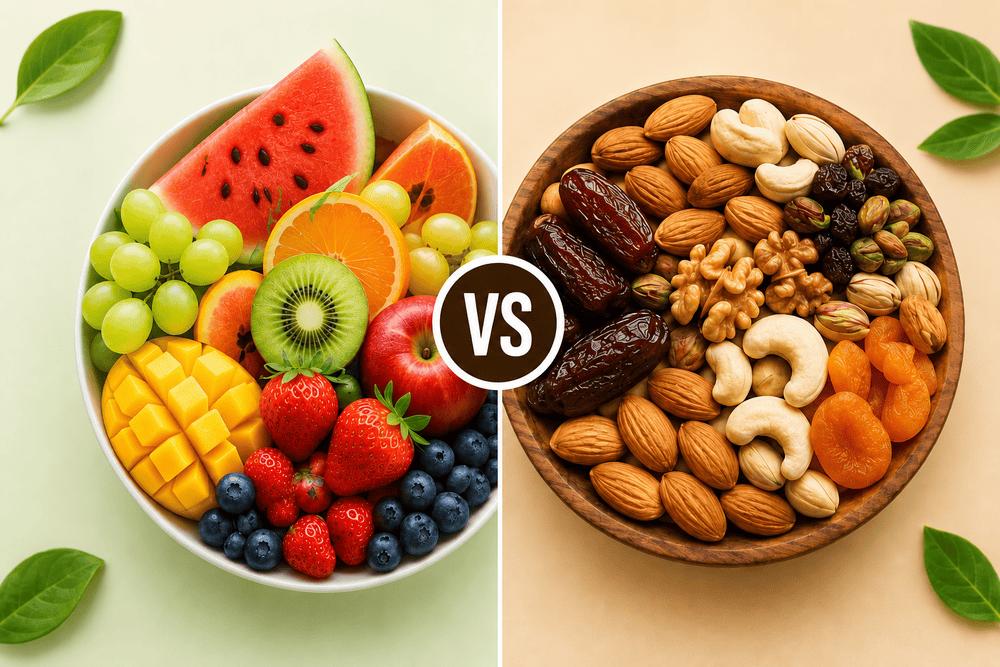
Walk into any supermarket, and you’ll see two very different fruit aisles competing for your attention – one stacked with crisp apples and juicy oranges, the other lined with bags of golden raisins, dried apricots, and chewy dates.
Both are marketed as “healthy,” but which one actually deserves a spot in your daily diet? Let’s break it down in this blog.
What Are Fresh Fruits?
Fresh fruits are exactly what they sound like, fruits picked and consumed in their natural, unprocessed state. Think apples, bananas, watermelons, grapes, and mangoes straight off the tree (or at least, as close to that as your local grocer can manage).
They’re typically high in water content, usually somewhere between 80-95%, which is what gives them that satisfying crunch or juiciness when you bite in. Because they haven’t been processed, fresh fruits retain their natural sugars, fiber, vitamins, and antioxidants in their original form.
Fresh fruits are also lower in calorie density compared to their dried counterparts, simply because water makes up so much of their weight.
What Are Dry Fruits?
Dry fruits, on the other hand, are fruits that have had most of their water content removed. Common examples include raisins, dried apricots, prunes, dates, figs, and dried cranberries.
Once dehydrated, these fruits become more concentrated, smaller in size, chewier in texture, and noticeably sweeter, since the sugars that were once diluted by water are now packed tightly together.
How Are Fruits Dried?
There are a few different methods used to turn fresh fruit into dry fruit:
1. Sun Drying – The oldest and most traditional method, where fruits are simply laid out under the sun for days until most of the moisture evaporates. This is commonly used for grapes (to make raisins) and apricots.
2. Hot Air Drying – Fruits are placed in controlled drying chambers where warm air circulates to remove moisture faster and more evenly than sun drying.
3. Freeze Drying – A more modern technique where fruit is frozen and then placed in a vacuum, allowing the ice to evaporate directly. This method tends to preserve more of the fruit’s original flavor, color, and nutrients compared to heat-based drying.
4. Osmotic Drying – Fruits are soaked in a sugar or salt solution to draw out water before being dried further, often used for things like dried mangoes or pineapple.
Do Dry Fruits Lose Nutrition or Taste When Dried?
Here’s where it gets interesting. Drying doesn’t strip fruit of all its goodness — fiber, minerals like potassium and iron, and certain antioxidants remain largely intact, and in some cases even become more concentrated.
However, some nutrients don’t survive the process as well. Vitamin C, for instance, is sensitive to heat and oxidation, so dried fruits generally contain less of it than their fresh versions.
As for taste, drying actually intensifies flavor. Since water is removed, the natural sugars become more concentrated, making dry fruits taste noticeably sweeter and richer than fresh fruit. This is exactly why a handful of raisins can satisfy a sugar craving faster than a bunch of grapes.
Fresh Fruits vs Dry Fruits – What Should You Eat?
Honestly? You don’t have to choose — they serve different purposes.
Fresh fruits are great for hydration, lower calorie snacking, and getting that satisfying volume of food without overloading on sugar. They’re ideal for everyday consumption and pair well with most meals.
Dry fruits are calorie-dense and perfect for quick energy boosts, especially before a workout or during travel when fresh produce isn’t practical. They’re also fantastic for baking, garnishing desserts, or adding to nuts and trail mixes.
Advantages and Downsides
Fresh Fruits
✅ High water content, great for hydration
✅ Lower in calories per serving
✅ Retains more Vitamin C
❌ Shorter shelf life
❌ Needs refrigeration and careful handling
Dry Fruits
✅ Long shelf life, easy to store and carry
✅ Energy-dense, great for quick nutrition
✅ Concentrated minerals and fiber
❌ Higher in calories and natural sugar per gram
❌ Easy to overeat due to small portion size
The healthiest approach is moderation — enjoy fresh fruits as part of your daily meals, and use dry fruits as a controlled, energy-packed snack rather than an all-day munching habit.
Where to Buy Fresh Fruits and Dry Fruits in UAE?
For everyday household needs, you can order directly through nrtcfresh.com – our consumer-facing platform designed for single, convenient orders of fresh fruits and premium dry fruits delivered right to your door.
If you’re a business, retailer, or looking to place bulk orders – whether for hotels, restaurants, supermarkets, or corporate gifting – it’s best to get in touch directly through nrtcgroup.com, where our team can assist with bulk pricing, supply chain solutions, and business partnerships tailored to your needs.
Whether you’re stocking your kitchen or your storefront, NRTC Group makes it easy to get fresh fruits and dry fruits without compromising on quality.