In a region where water scarcity and extreme climate conditions pose significant challenges to agriculture, we are rewriting the narrative of sustainable farming using state-of-the-art farms in Egypt’s Wadi El Natrun to tables across the UAE and beyond.
With over five decades of experience in the fresh produce industry, we are bringing the innovation and environmental stewardship to go hand in hand while creating a more food-secure future for the Middle East with every piece of produce that represents our dedication to excellence, sustainability and food security for generations to come.
A New Chapter in Regional Food Security
Our commitment to sustainable agriculture reached a milestone with the recent acquisition of Al Hashemeya Farms in Egypt’s Wadi El Natrun region. This strategic expansion represents far more than just increased production capacity—it’s a testament to the company’s vision of delivering farm-fresh produce directly from field to table while maintaining the highest standards of environmental responsibility.
Spanning over 10,000 acres of fertile farmland, this state-of-the-art facility has transformed the landscape of regional agriculture. The farm cultivates an impressive 1.8 million fruit trees and produces thousands of tonnes of yield annually, growing more than diverse crop varieties that meet the evolving demands of consumers across the UAE and beyond.
Where Innovation Meets Nature
At the heart of our revolutionary approach is the seamless integration of cutting-edge technology with time-tested agricultural wisdom. We pride in sustainable farming by implementing practices that not only boost productivity but also protect the environment for future generations. Some of the best practices we follow include:
1. Solar-Powered Irrigation: Energy-Efficient Water Management
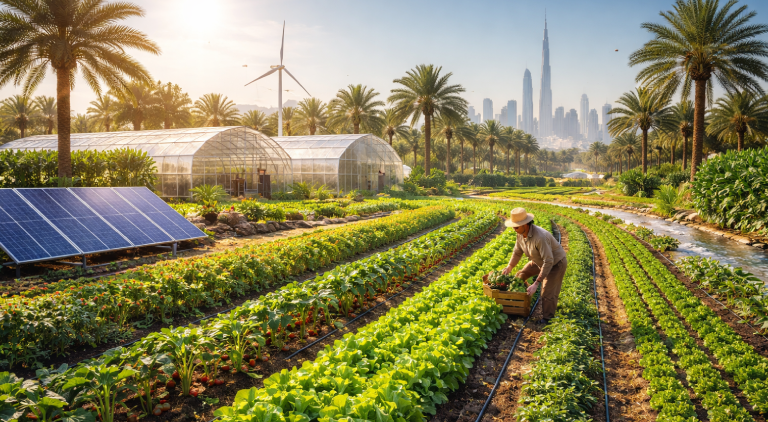
Water conservation is paramount in the arid climate of the Middle East, and we have addressed this challenge head-on with solar-powered irrigation systems. By harnessing the abundant sunshine that characterizes the region, the company has created an energy-efficient water management system that reduces reliance on conventional power sources while ensuring optimal hydration for crops.
This innovative approach serves a dual purpose: it significantly reduces the carbon footprint of farming operations while maximizing water efficiency—a critical consideration in an area where every drop counts. The solar infrastructure transforms a natural resource into a sustainable power source, creating a closed-loop system that exemplifies modern agricultural best practices.
2. Precision Farming: Growing Smarter, Not Harder
We employ precision farming techniques that leverage data analytics, sensors, and advanced monitoring systems to optimize every aspect of crop production. This scientific approach allows farmers to make informed decisions about irrigation schedules, fertilizer application, and pest management, minimizing waste and maximizing yield quality.
Center pivot irrigation systems—visible throughout the farm’s expansive acreage—ensure uniform water distribution while conserving resources. This technology represents the marriage of efficiency and effectiveness, delivering the right amount of water exactly where and when it’s needed.
3. Advanced Farming Techniques: Setting Industry Standards
NRTC’s commitment to innovation extends to its machinery and harvesting methods. The farm boasts the only olive harvester in Egypt, a specialized piece of equipment that revolutionizes the olive collection process. This advanced harvesting technology ensures fruit integrity while significantly reducing labor requirements and harvest time, demonstrating how mechanization can enhance both productivity and produce quality.
Our Sustainable Practices That Make a Difference
1. Eco-Friendly Farming Philosophy
Sustainability at NRTC isn’t just a buzzword—it’s embedded in every operational decision. Our eco-friendly practices encompass soil health management, integrated pest management systems, and biodiversity conservation efforts that protect the delicate ecosystems surrounding agricultural operations.
By prioritizing organic and sustainable growing methods, we ensure that produce is not only fresh and nutritious but also free from harmful chemicals and pesticides. This commitment resonates with health-conscious consumers who increasingly demand transparency about how their food is grown.
2. Strengthening the Supply Chain
The integration of Al Hashemeya Farms into NRTC’s operations has created a more resilient and efficient supply chain. By controlling production from seed to shelf, we can guarantee freshness, maintain quality standards, and reduce the environmental impact associated with long-distance transportation.
This vertical integration also enhances regional food security—a critical consideration for the UAE and neighboring countries importing significant portions of their fresh produce. By establishing robust agricultural operations within the region, we contribute to greater self-sufficiency and reduce vulnerability to global supply chain disruptions.
3. Trusted Partnerships: Collaboration Driving Sustainable Growth
We recognize that sustainable agriculture requires collaboration across the entire value chain. That’s why we have built trusted partnerships with suppliers, distributors, retailers, and consumers, creating an ecosystem that supports sustainable practices at every level.
These relationships extend beyond mere business transactions — it represents a shared commitment to environmental stewardship, quality assurance, and the advancement of agricultural innovation throughout the region.
A Bounty of Premium Produce
The diverse range of crops cultivated at our farms reflects both the versatility of their agricultural approach and the sophistication of their growing systems. Some of them include:
- Mangoes: Multiple varieties including Crimson, Keitt, and Naomi, each cultivated to achieve optimal sweetness and texture.
- Dates: Traditional Barhi date palms that connect the farm to the region’s agricultural heritage while meeting modern quality standards.
- Citrus: An extensive citrus program featuring Adalia lemons, grapefruits, and various mandarin varieties including Mikhal and Morcket, as well as Valencia oranges renowned for their juice quality.
- Olives: Specialized varieties such as Arbequina and Arbosana, grown using advanced cultivation techniques and harvested with cutting-edge equipment.
- Grapes: Both green and red grape varieties that demonstrate the farm’s ability to produce delicate fruits in challenging climatic conditions.
This diversity not only meets varied consumer preferences but also promotes crop rotation and soil health—fundamental principles of sustainable agriculture.
The NRTC Difference: 53 Years of Excellence
What sets us apart in the competitive landscape of agricultural production is our unwavering commitment to quality, sustainability, and innovation. With 53 years of experience in the fresh produce industry, we have developed an unparalleled understanding of what it takes to grow premium crops while respecting environmental boundaries.
From farm to table, across borders and beyond, our operations demonstrate that commercial success and environmental responsibility are not mutually exclusive. Instead, they’re complementary forces that drive long-term value creation for all stakeholders — from farmers and employees to consumers and communities.
Our final take on sustainable farming in UAE
As climate change intensifies and global food security becomes an increasingly pressing concern, the agricultural innovations pioneered by our farms offer a roadmap for the future. Our approach will prove that with the right combination of technology, expertise, and commitment, it’s possible to produce abundant, high-quality food while minimizing environmental impact.
Our continued investment in sustainable practices, renewable energy and precision agriculture signals our intention to remain at the forefront of agricultural innovation. As we expand our operations and refine the methods, we will not just be growing crops — our ambition steers towards building a more sustainable future for the entire region.