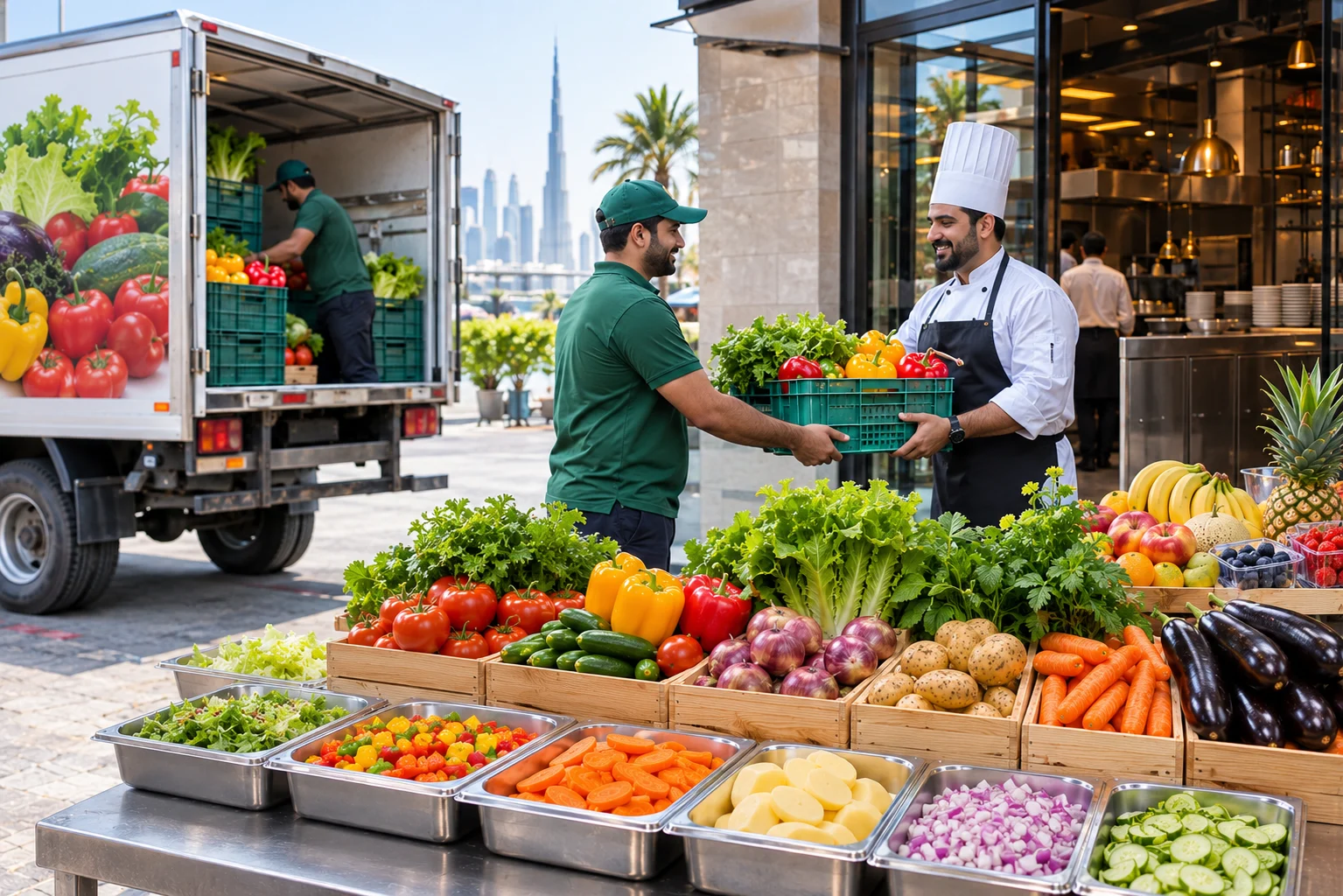
A restaurant can recover from a slow Tuesday. It’s much harder to recover from a delivery of limp herbs on a packed Friday night. Reliable fresh produce supplies for restaurants shape everything on the plate, from taste and presentation to food cost and waste.
In the UAE, where kitchens run hard and guests notice every detail, the supplier you pick is as important as the chef you hire. This guide covers what to look for and how to build a supply setup that doesn’t let you down.
What Counts as Fresh Produce?
Fresh produce is any fruit or vegetable sold raw and unprocessed, or only lightly prepared. For a restaurant kitchen, that usually means:
- Vegetables: tomatoes, cucumbers, peppers, onions, potatoes, carrots, eggplant
- Leafy greens and herbs: lettuce, rocket, spinach, mint, coriander, parsley
- Fruits: citrus, berries, melons, bananas, apples, seasonal tropical fruit
- Fresh cuts: washed, peeled and cut produce, ready for prep or service
Frozen, canned and heavily processed items sit outside this group. What defines fresh produce is how recently it was harvested and how well it was kept afterwards.
Why Consistent Fresh Produce Matters in Restaurants
Consistency matters as much as freshness. A great delivery on Monday followed by a poor one on Thursday leaves a kitchen guessing.
Here is what steady supply protects:
- Flavour and plating – The same size, colour and ripeness lets dishes look and taste the same night after night.
- Food cost – Produce that spoils early gets thrown away, and that waste lands straight on your margins.
- Reputation – A tired salad or a bruised garnish gets noticed, and photographed.
- Kitchen flow – Chefs plan menus around what they know will arrive.
The UAE’s climate adds pressure. Heat speeds up spoilage, and much of the country’s produce travels long distances before it reaches a kitchen. That puts extra weight on how it’s handled along the way.
What Drives Fresh Produce Supply in the UAE?
A few factors decide whether your produce arrives in good shape:
- Import sources. The UAE relies heavily on imports, so a supplier with several source countries can cover gaps when one harvest slows.
- Cold chain. Cooling at the packhouse, chilled transport and cold storage on arrival all protect shelf life.
- Seasonality. Local farms perform best in the cooler months, while summer leans more on imports.
- Logistics. Land, sea and air routes each have different speeds and costs, and delays at any point affect freshness.
- Quality grading. Sorting by size, ripeness and condition keeps what arrives in line with what you ordered. See how fruits and vegetables are graded for quality in the UAE.
How to Get Fresh Produce for Your Restaurant
- Know your numbers – Track weekly usage by item. Without this, you’ll either overorder or run short.
- Pick a supplier built for volume – Retail apps and market runs work for small top-ups. For daily service, a wholesale supplier with scheduled deliveries is steadier.
- Ask about the cold chain – Find out how produce is stored and transported from source to your door.
- Check import frequency – Daily imports usually mean fresher stock than weekly ones.
- Agree on grades and substitutions – Put sizes, quality levels and your substitution policy in writing, so a swap never surprises your chef.
- Set a standing order – Fix delivery days and windows that match your receiving hours. Keep a cut-off time for last-minute changes.
- Inspect on arrival – Train your team to check temperature, firmness and condition before signing. Our guide on how to choose fresh fruits and vegetables is a useful reference.
- Review after the first month – Look at freshness, accuracy and communication before committing long term.
NRTC Group for Consistent Fresh Produce Supplies
NRTC Group has supplied fresh produce across the Middle East since 1973, and restaurants, hotels and retailers across the UAE are among our clients.
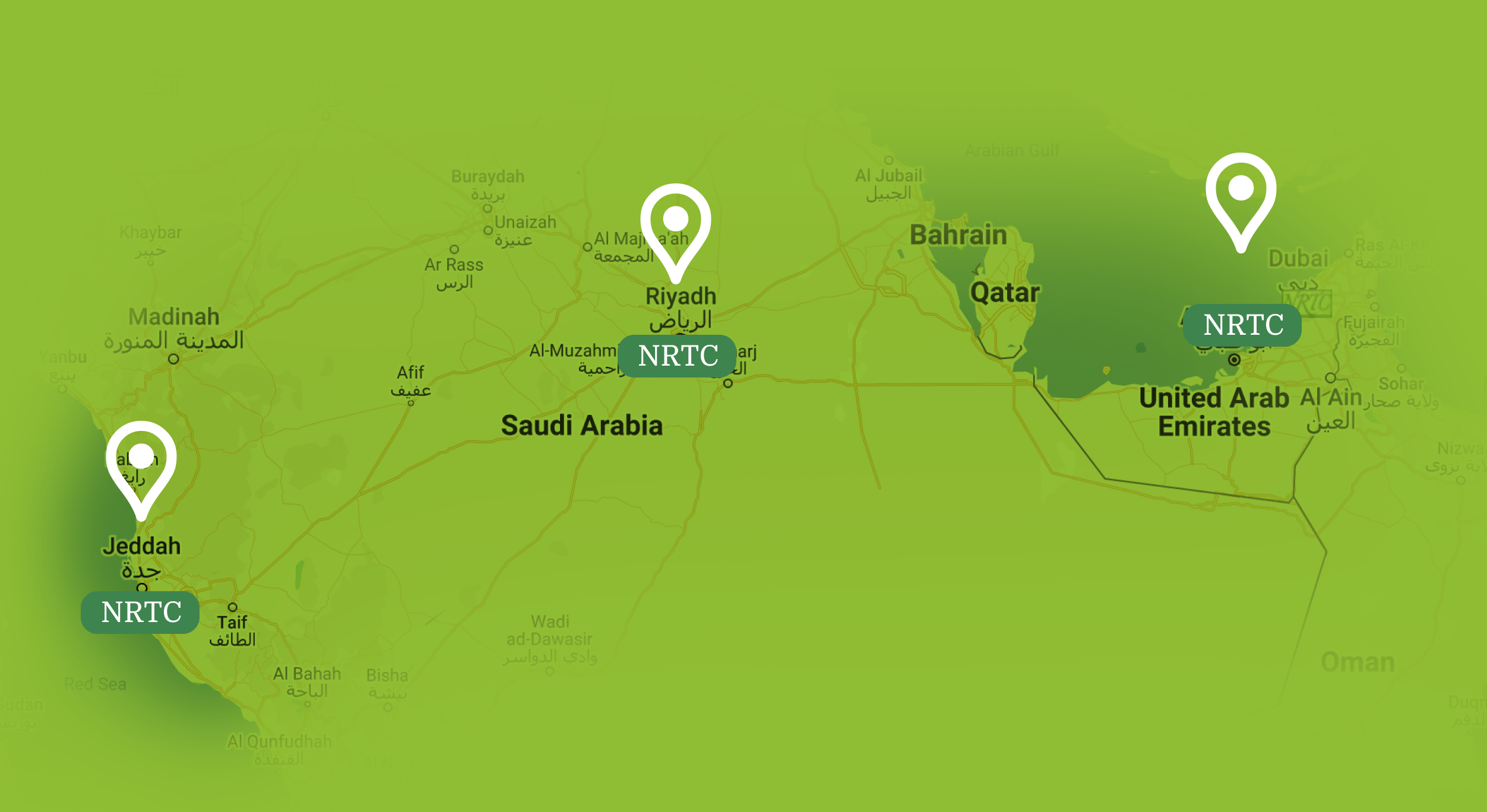
- Scale: we import over 400 tonnes daily from Lebanon, Turkey, Egypt, Saudi Arabia, Oman, Morocco and Jordan.
- Cold chain: 11 chiller sites with 35 temperature-controlled rooms keep stock fresh from arrival to dispatch.
- Local sourcing: we work with regional farmers in the UAE and Oman for seasonal produce.
- Range: vegetables, fruits, fresh cuts and an organic range, all from one supplier.
One supplier means one point of contact and one cold chain to hold accountable. That’s what keeps a kitchen running smoothly.
Conclusion
Good fresh produce supplies for restaurants come down to three things: a supplier with real cold-chain capacity, clear agreements on grades and delivery, and a habit of checking what arrives.
Get those right and your kitchen spends less time firefighting and more time cooking.
To talk volumes, delivery schedules or menu needs, contact the NRTC Group team.
Frequently Asked Questions about Ajman Market
1. What is the best way to source fresh produce for a restaurant in the UAE?
Work with a wholesale supplier that offers scheduled deliveries, documented cold-chain handling and clear grading standards.
2. How often should a restaurant order fresh produce?
It depends on the item. Leafy greens and herbs often need ordering several times a week, while root vegetables can be ordered less often.
3. Is fresh-cut produce worth using in a restaurant?
It can save prep time and keep portions uniform. Check the supplier’s hygiene and storage standards first.