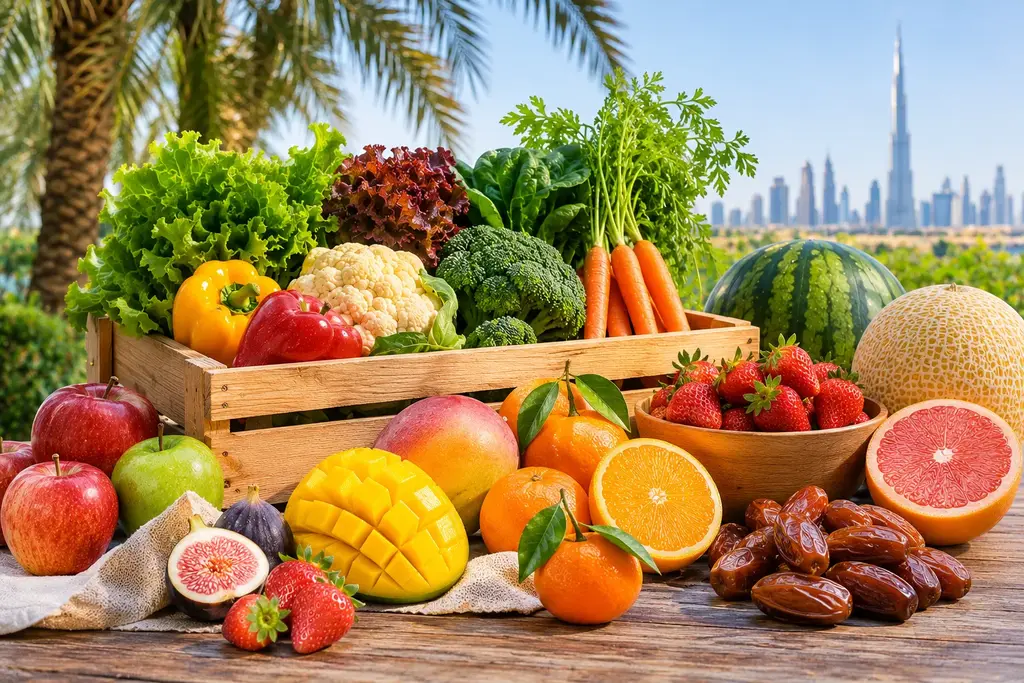
Winter is the best time of year for fresh produce in the UAE. From November to February, citrus such as oranges, mandarins and grapefruit are at their sweetest, strawberries and leafy greens are in good supply, and the cooler weather makes it easier to keep produce fresh from the chiller to your kitchen. This guide shows what is in season, where it comes from and how to choose it.
We have been supplying fresh produce across the UAE since 1973, and our online store, NRTC Fresh, brings that same sourcing to homes in Dubai. Here is what our wholesale experience says about eating well, season by season.
Key Takeaways:
- Winter (Nov–Feb): peak season for citrus, strawberries and leafy greens.
- Summer (May–Aug): mangoes, melons, figs and fresh UAE dates.
- “In season” has two layers in the UAE: the local growing season and the season in the country the produce is imported from.
- Choose by origin, weight, firmness and aroma, not by price alone.
- Cold chain matters: in UAE heat, how produce is stored and delivered affects freshness as much as the harvest.
How do seasons work in the UAE?
The UAE has two main seasons, a cooler winter and a long hot summer, with transitional periods in April–May and October–November, according to Arab Times. Local farms grow best in the cool months, which is why leafy greens and many vegetables are at their strongest in winter. Fruit works differently. The country is connected by air, sea and road to growing regions worldwide, so shelves stay full all year.
That means “in season” here usually refers to peak season at the origin. Mangoes are available year-round, for example, but the best imports from India and Pakistan arrive from May to the end of July, as The National has reported. Knowing the origin is the simplest way to buy fruit at its best.
UAE seasonal produce calendar
Use this as a guide to what peaks when. Exact availability changes with weather and shipments, so always check the origin label on the product page.
| Season | Peak fruit and vegetables | Typical origins | What to look for |
| Winter
Nov–Feb |
Oranges, mandarins, grapefruit, blood oranges, strawberries, apples, pears, leafy greens, cauliflower, broccoli, carrots | Egypt and other regional and global suppliers; UAE local farms for greens and vegetables | Citrus heavy for its size; strawberries red to the shoulder; crisp, dry greens |
| Spring
Mar–May |
Early mangoes, last of the winter citrus; local vegetables tapering off as heat builds | India (early mango varieties); regional suppliers | Mangoes with a sweet aroma at the stem and slight give |
| Summer
Jun–Sep |
Mangoes (peak May–July), watermelon, melons, figs, peaches, nectarines, plums, papaya, fresh dates | India, Pakistan, Kenya, Thailand, Middle East; UAE dates | Watermelon heavy with a hollow sound; figs soft but not leaking |
| Autumn transition
Oct–Nov |
First citrus and apples of the cool season; local cool-season vegetables beginning | Regional and global suppliers; UAE local farms | Firm, unbruised fruit; early citrus can be less sweet |
Winter 2026–27 spotlight: what to buy now
- Oranges and mandarins – The signature fruit of the cool months and a good source of vitamin C. Choose fruit that feels heavy for its size, with firm, glossy skin and a fresh citrus scent. Eat them as snacks, juice them, or add segments to winter salads.
- Grapefruit and blood oranges – Blood oranges are prized for their deep colour and sweet-tart flavour, and grapefruit is a refreshing breakfast fruit. Pick fruit that is firm with smooth skin and no soft patches.
- Strawberries – Winter is when strawberries do best. Look for berries that are bright red right up to the cap, with fresh green leaves and no wet or crushed spots. Keep them unwashed in the fridge and eat within a few days.
- Apples and pears – Crisp apples and pears are widely available through the cool months. Choose firm fruit without bruises, and store pears on the counter until they yield slightly at the neck.
- Leafy greens – Spinach, lettuce, rocket and kale thrive in cooler weather, and winter is when they are at their most tender and flavourful. Look for crisp, dry leaves with no yellowing or slime, and store them wrapped in a paper towel in a sealed container.
- Cool-season vegetables – Cauliflower, broccoli and carrots are staples of winter cooking. Heads should be tight and heavy, florets deep in colour, and carrots firm and snappy. Browse our local UAE produce for items grown closer to home.
How to tell if produce is fresh, in any season
- Check the origin – Buy from the country that is at its peak for that item.
- Feel the weight – Fruit should feel heavy for its size, which usually means it is juicy.
- Press gently – Look for firm fruit with a little give, with no soft spots or leaking.
- Smell it – Ripe fruit smells sweet near the stem; leafy greens should smell clean, never sour.
- Ask about the cold chain – Produce that has stayed chilled keeps its texture and flavour for longer.
Here are some detailed guides to check for freshness and quality –
- https://nrtcgroup.com/choosing-fresh-fruits-and-vegetables/
- https://nrtcgroup.com/fruits-and-vegetables-grading-for-quality/
How does fresh produce reach your door?
NRTC Group has been importing and distributing fresh produce since 1973, bringing in large volumes daily and distributing them through our chiller sites. Fruit is hand-selected, sorted and packed, and vegetables are sourced daily for retailers, kitchens and culinary buyers. NRTC Fresh was set up in December 2018 to bring produce from local and international farms directly to UAE residents.
Cold-chain discipline is a major quality factor for imported produce in the UAE, because of the heat during unloading and last-mile delivery, according to trade data from Tridge. That is why chilled storage and quick dispatch matter as much as picking the right variety. [Optional: add one real detail from your team, such as how quickly produce moves from arrival to dispatch.]
Demand also tends to rise ahead of the year-end holidays and Ramadan in early 2027, as FreshPlaza has noted for the Dubai market, so it helps to plan gifting and bulk orders early.
How does fresh produce reach your door?
- Citrus: keep on the counter for a few days, or in the fridge crisper for a couple of weeks.
- Strawberries: store unwashed in a single layer lined with paper towel, and wash just before eating.
- Leafy greens: dry thoroughly, wrap in paper towel and keep in a sealed container.
- Apples and bananas: they release ethylene gas that speeds up ripening, so keep them away from greens and other delicate produce.
- Overripe fruit: blend into smoothies, bake, or cook into a compote rather than throwing it away. Our recipes page has ideas.
How to buy seasonal produce online in Dubai
Shopping online makes it easy to buy what is at its best. On NRTC Fresh you can browse fresh fruits, vegetables, local UAE produce, pre-cut and sanitised vegetables and fresh gift boxes, with next-day delivery. New to ordering groceries online? Our buyer’s checklist for ordering sabji in the UAE walks through what to check before you pay.
You can also read our guide to guava, its nutrition and where to buy it in the UAE.
For restaurants, hotels and retailers: planning around the seasons
Seasonal planning helps kitchens keep menus consistent and costs under control. When a crop is at its peak, quality is higher, and supply is steadier, so building specials around it reduces waste and surprises. NRTC Group supplies leading retailers, wholesalers, hotels and institutions with fruit, vegetables, fresh cuts and fresh juices from our product range.
For more on getting supply right, read our guide to fresh produce supplies for restaurants in the UAE, or contact our team to discuss volumes and specifications.
Conclusion
Eating seasonally in the UAE comes down to knowing where your produce is from and when it peaks. This winter, fill your basket with citrus, strawberries and crisp greens, and check the origin label for everything else.
Ready to shop? Browse fresh produce on NRTC Fresh, or talk to us about wholesale supply
Frequently Asked Questions
1. What fruits are in season in the UAE in winter?
From November to February, citrus is at its best: oranges, mandarins, grapefruit and blood oranges. Strawberries, apples and pears are also widely available, and cool-season leafy greens and vegetables such as cauliflower, broccoli and carrots do well in the milder weather. Availability shifts with each shipment, so check the origin label.
2. What fruits are in season in the UAE in summer?
Summer, roughly May to August, is mango season, with imports from India and Pakistan at their best from May to the end of July. Watermelon, melons, figs and imported stone fruit such as peaches and nectarines are also plentiful, and the UAE’s own fresh date season runs through the hot months.
3. Is seasonal produce cheaper in the UAE?
Often, yes. When a crop is at its peak, supply is high, which usually brings prices down, and the fruit tends to spend less time in storage. Prices still move with freight costs, weather and demand, so compare per-kilo prices rather than assuming every in-season item is a bargain.
4. Is most fruit in the UAE imported?
The UAE grows some produce locally, mainly cool-season vegetables, leafy greens and dates, but many fruits arrive by air, sea and road from growing regions around the world. That is why the country of origin matters: an item can be at its peak in one country while out of season in another.
5. How can I tell if imported fruit is fresh?
Check the origin label, then use your senses: firm but not hard, heavy for its size, free of soft spots and fragrant at the stem end. In the UAE’s heat the cold chain matters just as much, so buy from suppliers that keep produce chilled from arrival through to delivery.
6. Can I buy fresh fruits and vegetables online in Dubai with next-day delivery?
Yes. NRTC Fresh sells fruits, vegetables, local UAE produce, pre-cut vegetables and fresh gift boxes online and lists next-day delivery. Order cut-off times can vary by product, so check the details at checkout.