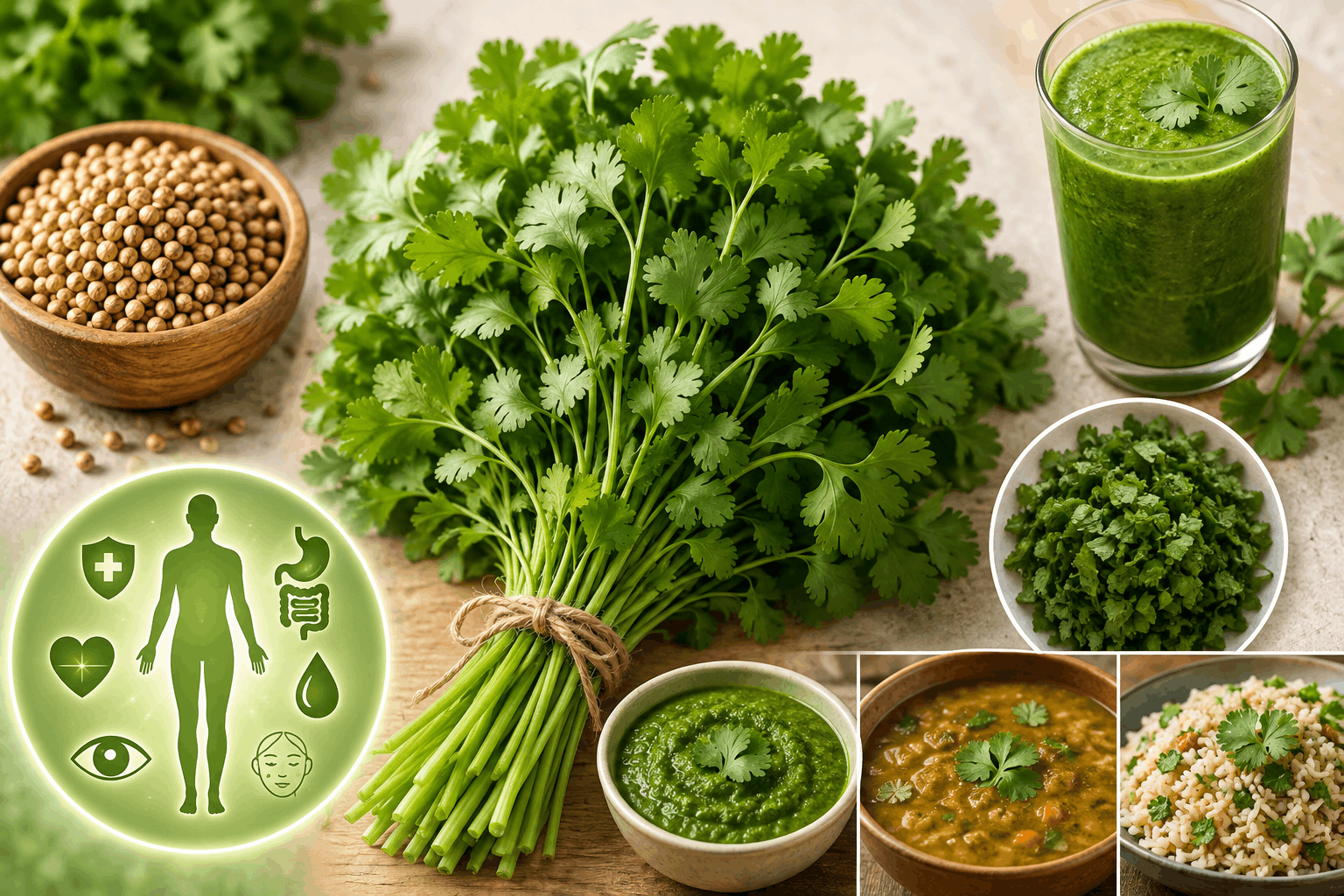
Open almost any fridge in the UAE or Saudi Arabia, and there’s a good chance you’ll spot a bunch of coriander tucked in somewhere. It’s one of those herbs that shows up everywhere — in curries, on grilled meats, stirred into a bowl of hummus, or simply scattered over rice right before it hits the table.
Loved by some, mildly divisive with others (more on that later), coriander has earned a permanent spot in kitchens across the region. But beyond the flavor it brings, this little green herb is also doing a surprising amount of nutritional heavy lifting.
Let’s dig into what makes coriander so special, and why it deserves more credit than just being “that garnish on top.”
What is Coriander?
Coriander (Coriandrum sativum) is a herb from the same family as carrots, celery, and parsley. In many parts of the world; including North America, the leaves are actually called cilantro, while “coriander” refers specifically to the dried seeds. In the UAE and Saudi Arabia, though, “coriander” typically covers both the fresh leafy herb and the seeds, and you’ll find both used constantly in regional cooking.
The plant itself is fast-growing and fairly easy to cultivate, which is part of why it’s so widely available fresh across local markets and grocery platforms.
The leaves have a bright, citrusy, slightly peppery flavor, while the seeds carry a warmer, more earthy and slightly sweet taste, different enough that they’re often used for entirely different purposes in the kitchen.
Nutritional Facts
Don’t let the light, feathery leaves fool you; coriander is nutritionally dense for something so low in calories. A 100-gram serving of fresh coriander leaves contains roughly:
- Calories: 23
- Vitamin K: around 310 mcg, well over 250% of the recommended daily value
- Vitamin A: about 337 mcg, close to 40% of daily needs
- Vitamin C: around 27 mg, roughly 30–45% of daily needs
- Folate, potassium, iron, and manganese in meaningful amounts
- Fiber: close to 3g, actually outperforming spinach on this front
- Carbs: under 4g, with a low glycemic index
The standout here is Vitamin K – coriander is one of the richest natural sources of it among common culinary herbs, making it genuinely useful for more than just flavor.
Health Benfits Of Coriander
Coriander isn’t just a pretty garnish; it comes with a solid list of potential health perks:
- Supports bone and blood health — Thanks to its high vitamin K content, coriander plays a role in blood clotting and bone density support.
- Rich in antioxidants — Compounds like quercetin and kaempferol found in coriander are linked to reduced inflammation and cellular protection.
- May help manage blood sugar — Some research suggests coriander can support healthier blood sugar levels and improve insulin response, making it a favorite herb for those watching their diabetes management.
- Aids digestion — Coriander has traditionally been used to ease bloating and support gut comfort, especially when paired with rich or spicy foods (which, conveniently, is exactly how it’s often served in the region).
- Supports immunity — With decent levels of vitamin C and A, coriander contributes to immune function and skin health.
- Low-calorie flavor boost — For anyone watching their calorie intake, coriander adds a serious punch of flavor without adding meaningful calories or carbs.
Worth noting: Coriander is high enough in vitamin K that people on blood-thinning medication should keep their intake consistent and check in with a doctor, since vitamin K can interact with those medications.
How Coriander is Consumed in the UAE & Saudi Arabia?
In both the UAE and Saudi Arabia, coriander plays a starring supporting role across countless dishes. Fresh coriander leaves are commonly chopped and folded into salads like tabbouleh, blended into fresh chutneys and dips, or sprinkled generously over grilled meats, kebabs, and rice dishes like machboos, kabsa, and biryani. It’s also a key player in many curries, lentil dishes, and soups, added either during cooking or as a fresh finishing touch.
Coriander seeds, meanwhile, are a spice-cabinet staple. They’re commonly toasted and ground into spice blends, used whole in pickling, or incorporated into meat rubs and marinades that are central to Emirati and Gulf cooking. Between the leaves and the seeds, coriander touches nearly every part of the meal, from the base spice blend to the final garnish on the plate.
Why Is It So Popular for Garnishing in Indian and Emirati Dishes?
There’s a reason coriander shows up on top of so many dishes across Indian and Emirati cuisine; it does a lot of work in a small amount of space. Its bright, citrusy flavor cuts through rich, heavy dishes like curries, biryanis, and kabsa, balancing out the fat and spice with something fresh and light. Visually, that vivid green color also makes a dish look more vibrant and appetizing the moment it hits the table.
There’s a practical side too. Coriander is inexpensive, widely available, and holds up reasonably well when kept fresh, making it an easy go-to for households and restaurant kitchens alike. Combine that with centuries of culinary tradition in South Asian and Gulf cooking, where fresh herbs are used generously rather than sparingly, and it’s easy to see why coriander became the default finishing touch across so many beloved regional dishes.
Where to Buy Fresh Coriander in the UAE?
If you’re looking to stock up on fresh, quality coriander in the UAE, NRTC Fresh makes it simple. You can browse and order fresh coriander directly online, with the same next-day delivery and quality assurance NRTC Fresh is known for across its wider produce range.
It’s a straightforward way to make sure your coriander stays fresh from the moment it arrives at your door to the moment it lands on your plate.
Order Coriander from NRTC Fresh now – https://nrtcfresh.com/products?name=coriander&data_from=search&page=1
Coriander might be small, but it carries a big reputation and rightfully so. Between its impressive Vitamin K content, antioxidant properties, and its role as a flavor powerhouse across Indian, Emirati, and wider Gulf cuisine, it’s easy to see why this herb has earned a permanent place in kitchens across the UAE and Saudi Arabia.
Whether you’re using it to finish off a bowl of kabsa or blending it into a fresh chutney, keeping a steady supply of good-quality coriander on hand is one of the simplest ways to add both flavor and nutrition to your everyday cooking.