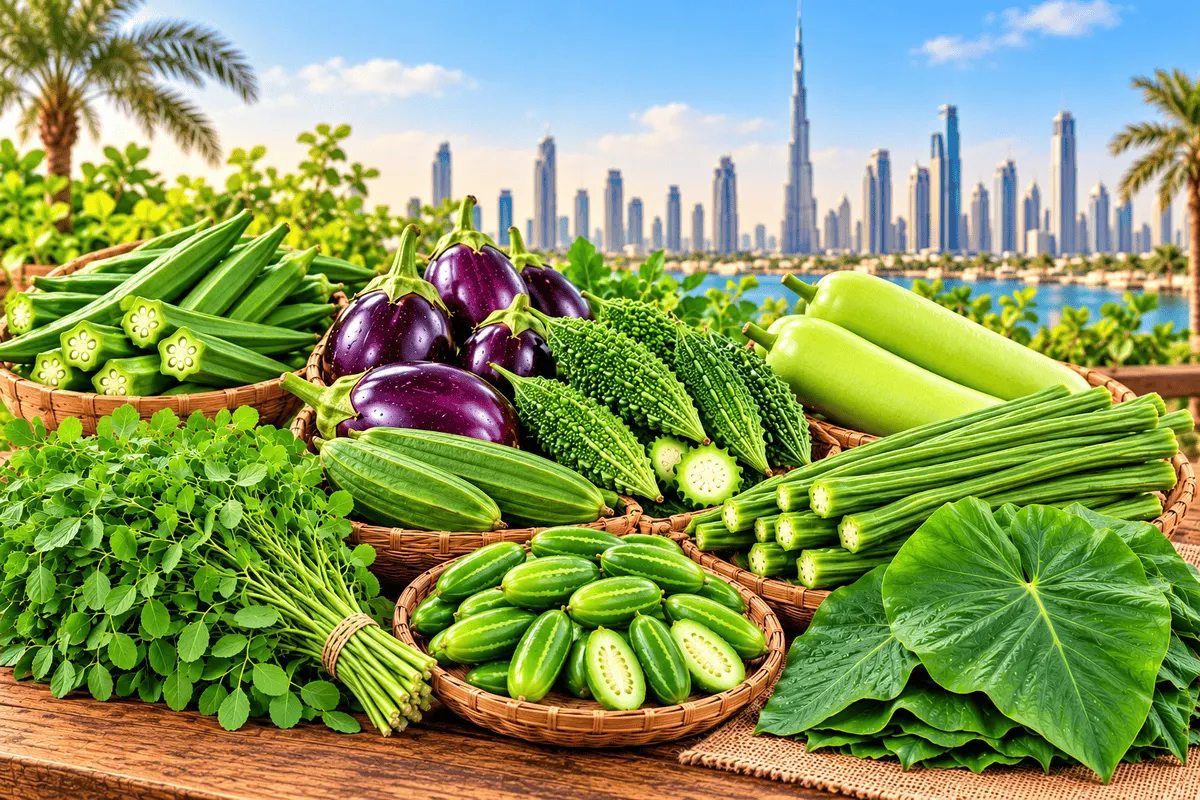
If you’ve ever wandered through a Dubai vegetable market craving the taste of home-cooked sabzi, you already know the relief of spotting a pile of fresh okra or a bundle of methi leaves sitting next to the usual tomatoes and onions.
Indian vegetables have become a fixture in UAE kitchens; not just in Indian households, but on the menus of restaurants, hotels, and home cooks who’ve simply fallen for their flavour. This piece walks through what makes them worth seeking out, which ones show up most often on UAE shopping lists, and where to actually get them fresh.
Fresh Indian Vegetables: A Quick Overview
Indian vegetables cover a lot of ground, literally and in terms of variety. Gourds, greens, roots, and pods that rarely make it into a typical Western grocery aisle are everyday staples in Indian cooking. Think bitter gourd, drumstick, colocasia, ridge gourd, and a dozen types of leafy greens, each suited to a different regional cuisine and cooking style.
What ties them together isn’t just origin; it’s how they’re grown and used. Many of these vegetables thrive in warm, humid climates, which happens to make them well-suited to farming in the Gulf region too, alongside imports from India itself. They’re typically harvested young, cooked simply (a quick sauté, a curry, a stir-fry) and prized as much for their medicinal reputation in Ayurveda as for their taste.
Why Indian Vegetables? What’s the Advantage
There’s a reason these vegetables have stuck around in Indian households for generations — they’re genuinely good for you, and they don’t ask much of the cook either.
- Nutrient density in small servings – Vegetables like drumstick and fenugreek leaves pack in vitamins and minerals disproportionate to their size, which is part of why they’ve long been used in traditional home remedies.
- Digestive-friendly – Bitter gourd, ridge gourd, and bottle gourd are all light on the stomach and high in water or fibre content, making them easy on digestion, especially in hot climates.
- Versatility in the kitchen – These vegetables adapt to curries, stir-fries, soups, and even juices, so they fit into everything from a quick weeknight meal to a slow-cooked family recipe.
- Cultural familiarity – For the large Indian expat community in the UAE, these aren’t just vegetables; they’re comfort food, tied to memory and home.
Most Popular Indian Vegetables Consumed in the UAE
Walk into any South Asian grocery store in Dubai, Abu Dhabi, or Sharjah, and you’ll see the same handful of vegetables reappearing on shelves week after week. Here’s what tends to sell out fastest.
1. Okra (Bhindi)
Also known as lady’s finger, okra is a UAE grocery staple thanks to its versatility — fried, curried, or stuffed, it holds up well in all of them.
- Nutrition (per 100g, approx.): 33 kcal, 3g fibre, 23mg vitamin C, folate, vitamin K
- Health benefits: Supports digestion through its fibre and mucilage content, contributes to bone health via vitamin K, and offers a solid dose of antioxidants.
2. Brinjal / Eggplant (Baingan)
Eggplant shows up in everything from baingan bharta to sambar, and its mild flavour makes it a canvas for spices.
- Nutrition (per 100g, approx.): 25 kcal, 3g fibre, manganese & vitamin C
- Health benefits: Low in calories with skin-rich antioxidants (nasunin) that may support heart and brain health.
3. Bitter Gourd (Karela)
An acquired taste for some, but a favourite for those managing blood sugar or looking for a digestive tonic.
- Nutrition (per 100g, approx.): 17 kcal, 84mg vitamin C, iron, fibre
- Health benefits: Traditionally used to support healthy blood sugar levels; also a strong source of vitamin C for immunity.
4. Bottle Gourd (Lauki)
Mild, watery, and easy to digest — lauki is often the first vegetable recommended after an illness or for a light meal.
- Nutrition (per 100g, approx.): 15 kcal, 96% water content, vitamin C, potassium
- Health benefits: Excellent for hydration, supports weight management, and is gentle on the stomach.
5. Ridge Gourd (Turai)
A summer vegetable that cooks down soft and slightly sweet, turai is common in both curries and dals.
- Nutrition (per 100g, approx.): 20 kcal, fibre, vitamin C, magnesium
- Health benefits: Low-calorie and fibre-rich, it aids digestion and is often included in weight-conscious diets.
6. Drumstick (Moringa / Sahjan)
The pods of the moringa tree, drumsticks, are a South Indian sambar essential and one of the most nutrient-packed vegetables on this list.
- Nutrition (per 100g, approx.): 37 kcal, 141mg vitamin C, calcium, iron
- Health benefits: Exceptionally high in vitamin C and calcium, supporting immunity and bone strength.
7. Fenugreek Leaves (Methi)
Slightly bitter, deeply aromatic — methi is used both as a leafy green and, dried, as a spice.
- Nutrition (per 100g, approx.): 49 kcal, iron, calcium, vitamin K
- Health benefits: A good plant source of iron, useful for supporting healthy blood levels, plus benefits for digestion and blood sugar regulation.
8. Ivy Gourd (Tindora / Kovakkai)
Small, crunchy, and quick-cooking, tindora is a go-to for stir-fries across South Indian households.
- Nutrition (per 100g, approx.): 18 kcal, fibre, vitamin A, vitamin C
- Health benefits: Supports eye health via vitamin A and contributes to healthy digestion.
9. Colocasia Leaves (Arbi ka Saag)
Used in dishes like patra and saag, colocasia leaves have an earthy, distinct flavour once cooked properly (raw leaves can irritate the throat).
- Nutrition (per 100g, approx.): 42 kcal, vitamin A, potassium, folate
- Health benefits: Rich in potassium for heart and muscle function, along with a healthy dose of folate.
Why Buy Fresh Indian Vegetables from NRTC Group
Finding these vegetables is one thing; finding them genuinely fresh is another. NRTC Group has been sourcing and supplying fresh produce across the UAE and Saudi Arabia for over 50 years, with the cold chain infrastructure (11 chiller sites, 35 temperature-controlled rooms) to make sure vegetables travelling from farm to shelf actually stay fresh along the way. Our sourcing network draws from trusted regional farms and international suppliers, so whether you’re after a small batch for home cooking or bulk quantities for a restaurant kitchen, quality and consistency don’t get compromised.
Conclusion
Indian vegetables have earned their place in UAE kitchens — not out of nostalgia alone, but because they’re nutritious, versatile, and genuinely good eating. Whether it’s a quick bhindi fry on a weeknight or drumstick sambar for a family gathering, having access to fresh, reliably sourced produce makes all the difference to the final dish.
Looking to stock up? For direct, single orders, shop at nrtcfresh.com. For bulk or business orders, get in touch through nrtcgroup.com.